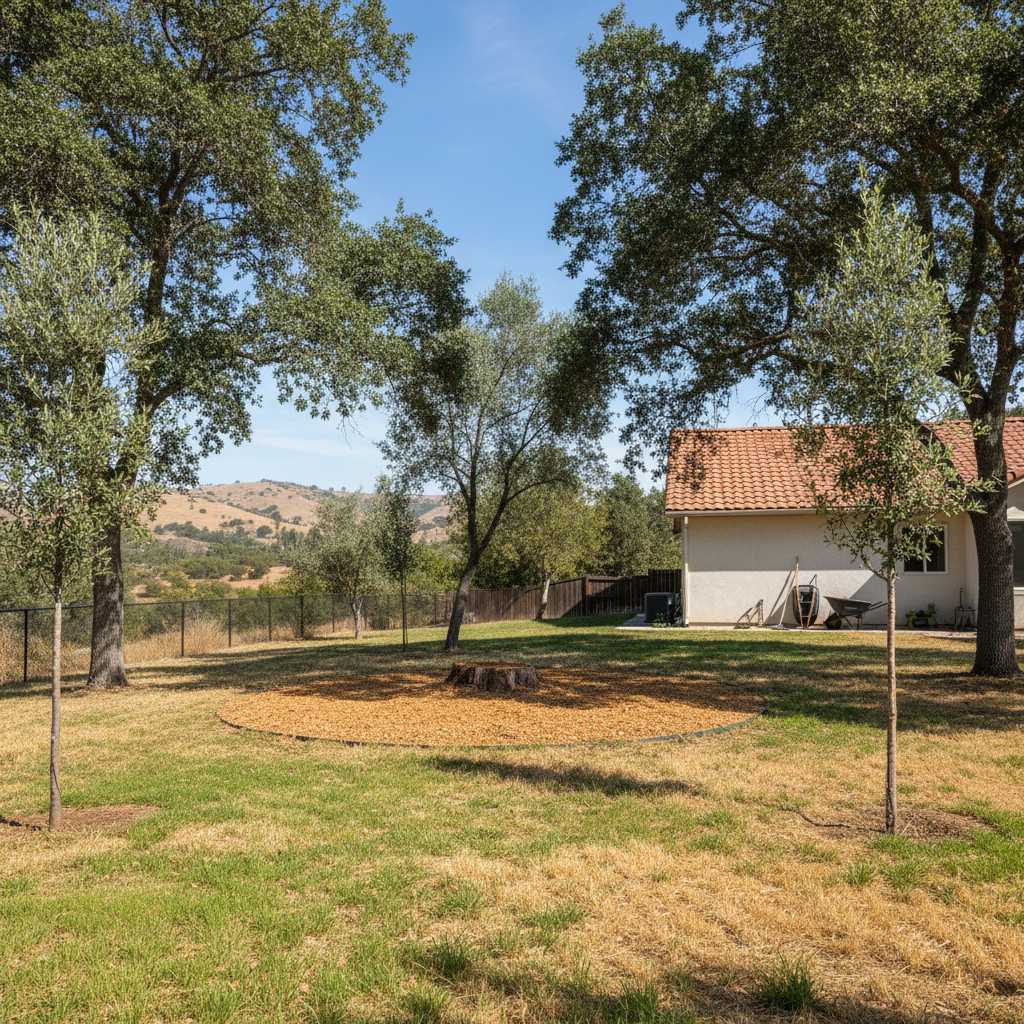
That old tree stump sitting in your yard? It's more than just an eyesore; it's a tripping hazard, a pest magnet, and a real pain if you're trying to re-landscape. Getting rid of it seems simple enough, right? Just call a guy with a grinder. Well, I've been doing this for years here in Camarillo, and I've seen plenty of homeowners make some pretty common, and often costly, mistakes when it comes to stump grinding and removal. Let's make sure you don't fall into the same traps.
Mistake #1: Not Knowing the Difference Between Grinding and Removal
This is a big one. A lot of people use these terms interchangeably, but they're not the same thing. Stump grinding means we grind the stump down to a certain depth, usually 6 to 12 inches below grade. This gets rid of the visible part of the stump and allows you to plant grass or even a new shrub over the area. But the roots are still there, deep underground. They'll eventually decompose, but it takes time.
Stump removal, on the other hand, means we're pulling out the entire stump and as much of the root system as possible. This leaves a much bigger hole, and it's a more involved, often more expensive process. You'd typically opt for removal if you're planning to build something on that spot, pour concrete, or plant a new, large tree directly where the old one was. If you just want to mow over it, grinding is usually all you need. Make sure you're clear with your contractor about what you actually want done, and what the quote covers.
Mistake #2: Hiring the Cheapest Guy Without Asking Questions
I get it, everyone wants a good deal. But when it comes to something like stump work, the cheapest bid can often end up costing you more in the long run. I've seen plenty of 'fly-by-night' operations come through Camarillo, especially after a big storm when everyone's looking for tree work. They'll give you a rock-bottom price, do a half-baked job, and then disappear when you have an issue.
You need to ask about their insurance. Do they have general liability and workers' comp? If someone gets hurt on your property or damages your fence, and they're not insured, you could be on the hook. Ask for references. Check their online reviews. A reputable company, like us at Pacific Tree, will be happy to provide all that information. Don't just go by price; go by reputation and proper coverage.
Mistake #3: Forgetting About What's Underground
This is a critical step that homeowners often overlook, and it can lead to serious problems. Before any digging or grinding starts, you absolutely need to call 811. That's the 'Dig Alert' service. They'll come out and mark where your underground utilities are – gas lines, water pipes, electrical conduits, communication cables. It's a free service, and it's the law.
Hitting a gas line or an electrical cable isn't just a headache; it's incredibly dangerous and can be incredibly expensive to repair. Even if you think you know where everything is, don't skip this step. Trust me, it's not worth the risk. We always insist on it before we even think about firing up a grinder.
Mistake #4: Not Considering the Cleanup
When you grind a stump, you're left with a big pile of wood chips and dirt. This is called 'grindings' or 'mulch.' Some contractors will include hauling away these grindings in their quote, and some won't. If they don't, you're left with a big pile of material to deal with yourself. It's great for composting or spreading in garden beds, but if you don't have a use for it, it becomes a chore.
Make sure you clarify this upfront. Is the cleanup included? How much of the grindings will be removed? What will the site look like when they leave? You don't want to be surprised by a mountain of wood chips you didn't budget for or expect.
Mistake #5: Ignoring the Soil Conditions
Here in Camarillo, especially in some of the older neighborhoods with established trees, we often have pretty dense, sometimes clay-heavy soil. This can affect how easily a stump grinds and how much effort is involved in removal. If a contractor doesn't even ask about your soil or the size of the stump, that's a bit of a red flag. A good contractor will want to assess the situation properly, maybe even ask about the tree species, as some wood is harder to grind than others.
Don't just assume every stump is the same. A professional will take the time to understand the specifics of your project and give you an accurate quote based on the actual work involved, not just a guess.
Getting rid of a stump doesn't have to be a headache. Just be informed, ask the right questions, and don't rush into a decision. A little homework upfront can save you a lot of grief and money down the road.